


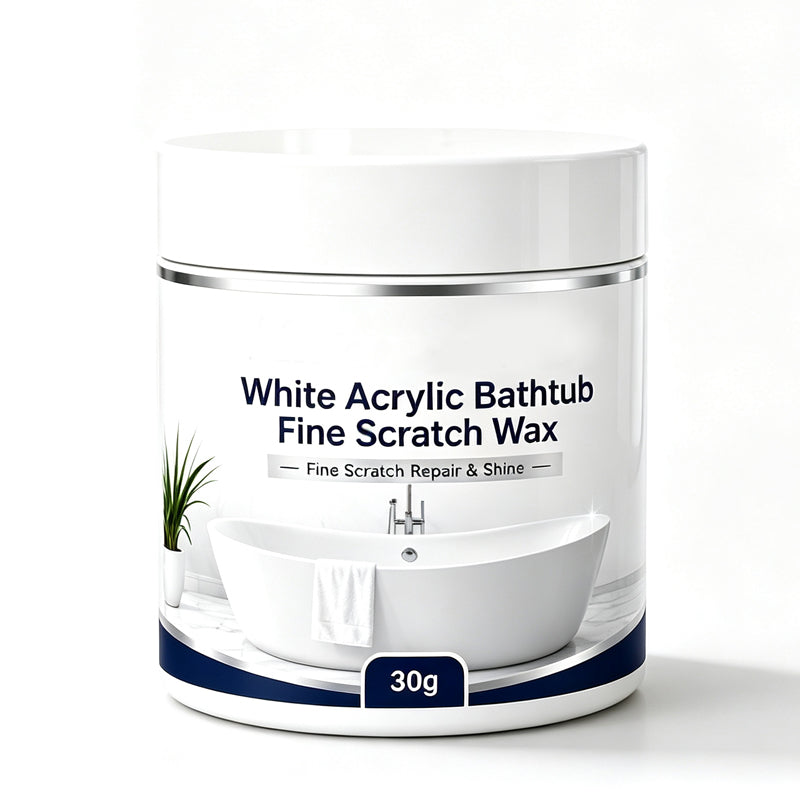
White Acrylic Bathtub Fine Scratch Repair Wax
White Acrylic Bathtub Fine Scratch Repair Wax
🛁 Helps Reduce The Look Of Fine Scratches
✨ Smoother Surface Feel
🧽 Easy DIY Touch-Up
🏠 Bathroom Surface Maintenance
Couldn't load pickup availability


Your Tub Still Works Fine — So Why Does It Look So Worn?

Give Minor Scratches A Cleaner Finish
Helps Fill & Visually Soften Fine Surface Marks
The wax is designed to settle into shallow scratches and surface scuffs, helping reduce the contrast between the damaged area and the surrounding white acrylic.
After rubbing and buffing, light marks can appear less noticeable and the surface can look more even overall.

Smooth The Surface, Not Just The Look
Buff Away That Rough, Lightly Scratched Feel
Micro-scratches can make acrylic feel slightly rough or uneven, especially across frequently used areas.
Working the repair wax into those shallow imperfections can help create a smoother feel after buffing.

Fix The Small Damage Before Paying For A Big Repair
A Lower-Cost First Step For Minor Acrylic Wear
Minor scratches and scuffs don’t always justify paying for professional resurfacing or replacing the entire fixture.
For shallow cosmetic damage, this repair wax gives you a simple, lower-cost first step you can try at home.
Lower-Cost Touch-Up
DIY At Home
Helps Extend Surface Use
What Customers Are Raving About!
-

"Perfect For Surface‑Level Scratches"
I bought this for a scuff on my sink base. It applied easily and blended well with my standard white acrylic. I also tried it on a deeper gouge and it didn’t do much there, but for surface scratches it worked very well.
-

"The Kids Scratched The Tub With Their Toys"
The kids had scratched up their bathroom tub with toys. I rubbed the wax in using circular motions and wiped away the excess. It genuinely filled in the shallow marks and the tub looks much better now.
-

"Brought Back Some Shine On An Older Tub"
My older acrylic tub had lots of micro‑scratches that were catching dirt and making the bottom look dull. I spent some time working this over the surface and it brought back a nicer shine. It also feels smoother now.


Find answers to common questions about our products, shipping, returns, and more.
Frequently Asked Questions
What kind of scratches can this repair?
What kind of scratches can this repair?
It is intended for fine, shallow scratches, light scuffs, and minor cosmetic wear on compatible white acrylic surfaces. It will not repair deep gouges, cracks, chips, or structural damage.
Will it completely remove every scratch?
Will it completely remove every scratch?
No. Results depend on the depth and type of damage. Fine marks may become much less noticeable, while deeper damage can remain visible.
Can I use it on colored acrylic?
Can I use it on colored acrylic?
No. It is intended for white acrylic surfaces. Other colors may show a visible mismatch.
Can I use it on fiberglass, enamel, ceramic, or porcelain?
Can I use it on fiberglass, enamel, ceramic, or porcelain?
Only use it on confirmed compatible surfaces. If you are unsure of the material, test a hidden area first or verify the surface type before applying.
How much should I use?
How much should I use?
Start with a small amount and gradually work it into the damaged area. Proper rubbing and buffing matter more than simply applying a thicker layer.
What should I do before using it?
What should I do before using it?
Clean and dry the area completely, then test a small inconspicuous spot before treating a larger section.