


🔥 The Air Still Feels Warm With A Fan On
A fan moves air, but it does not create a cold side for stronger cooling support.
Spend $55 more to get free shipping!

Create A Broader Cooling Zone With One Compact Module
❄️ Wide-Area Cooling Support
🏠 Creates A Larger Comfort Zone
🌬️ Dual-Fan Airflow Structure
🧊 Cold-End Cooling Module Design
Couldn't load pickup availability
Step 1: Plan The Airflow Direction
Decide where the cooler air should move and where the hot air should exit.
Step 2: Prepare A Stable 12V Power Source
Use a compatible DC 12V power supply that can support the required current and load.
Step 3: Connect Red To Positive, Black To Negative
Follow the correct polarity before powering the module.
Step 4: Secure The Module Firmly
Mount the unit in a stable position to avoid shaking, loose wiring, or blocked airflow.
Step 5: Keep Hot-Side Ventilation Open
The hot side must release heat properly for the cold side to perform better.
Step 6: Test Before Long Use
Run a short test first to check cooling response, fan operation, heat exhaust, and wire temperature.


REAL LIFE MOMENTS
Four common reasons a regular fan may not feel enough when the indoor air stays warm.
A fan moves air, but it does not create a cold side for stronger cooling support.

Sun exposure, electronics, poor ventilation, and trapped warm air can make the room feel uncomfortable.

Some mini cooling products only give a tiny point of cool air without changing the overall indoor feel.

Traditional cooling systems can be too large, costly, or complicated for DIY indoor cooling setups.
★★★★★ RATED 4.8 BY FROM REAL CUSTOMERS
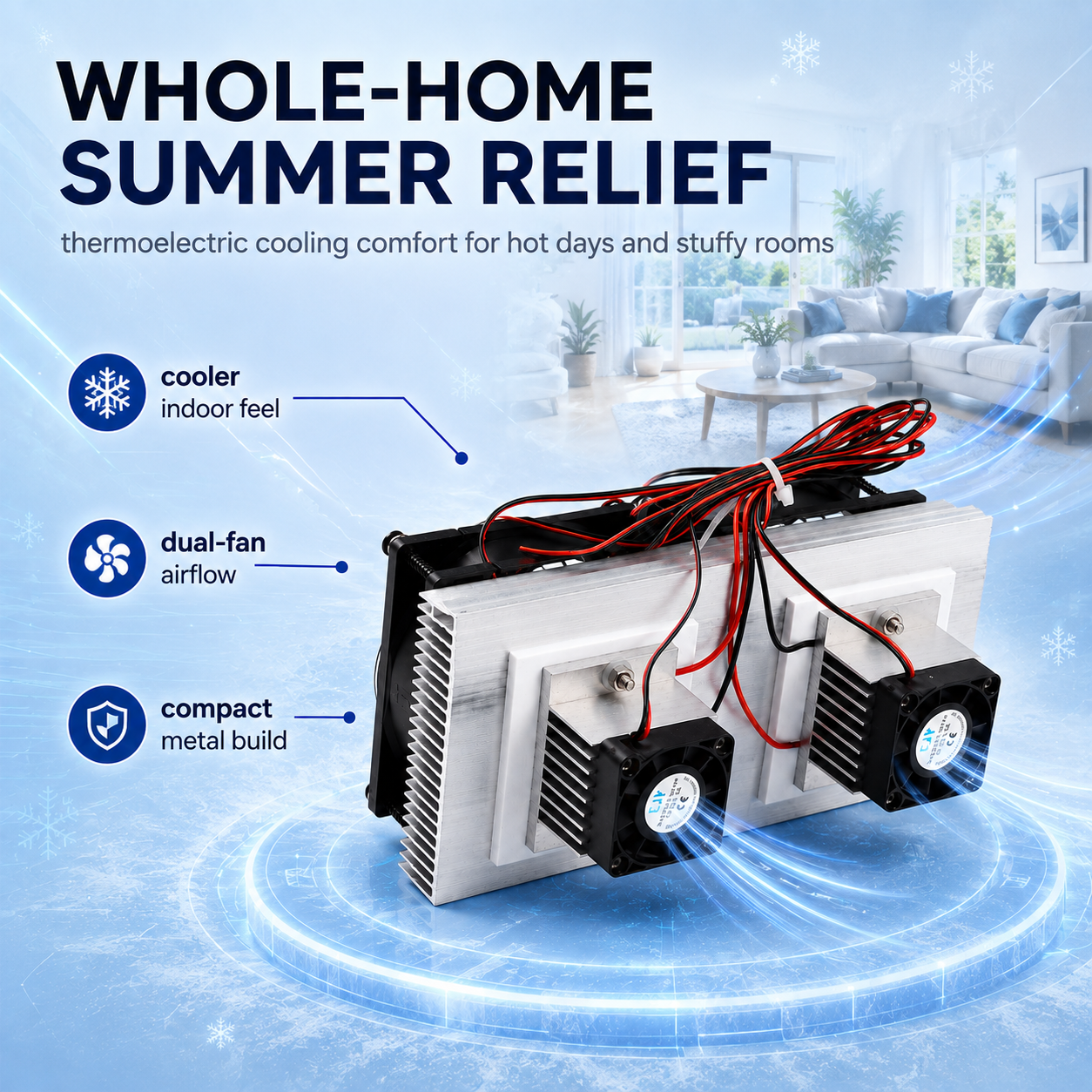
Upgrade your DIY cooling setup with this compact thermoelectric module. Pre‑assembled with dual‑fan airflow and large‑scale heat dissipation, it delivers refreshing cooling without refrigerants or bulky compressors. Enjoy nice cool airflow with no high‑energy costs.

A regular fan can only move the air that is already in the room. This thermoelectric kit uses a semiconductor cooling plate to create a cold-end effect, helping the airflow feel noticeably cooler and more refreshing during warm indoor days.

The dual-fan structure helps push cooler air outward instead of keeping the cold effect close to the module. With proper placement and heat exhaust, it helps create a more noticeable indoor cooling atmosphere, making the room feel less hot, heavy, and stuffy.

Bulky cooling machines can take up space and feel difficult to install. This compact module uses thermoelectric cooling, so there is no compressor or refrigerant line required. It gives DIY users a cleaner, lighter way to add cooling support indoors.
Performance may vary by indoor temperature, airflow direction, insulation, power supply quality, hot-side ventilation, installation position, and usage setup.
Large Aluminum Radiator
Cold-End Module Design
Dual Cooling Fan Structure
Large Aluminum Radiator
Cold-End Module Design
Dual Cooling Fan Structure
Large Aluminum Radiator
Cold-End Module Design
Dual Cooling Fan Structure
Large Aluminum Radiator
Cold-End Module Design
Dual Cooling Fan Structure
Large Aluminum Radiator
Cold-End Module Design
Dual Cooling Fan Structure
Large Aluminum Radiator
Cold-End Module Design
Dual Cooling Fan Structure
Large Aluminum Radiator
Cold-End Module Design
Dual Cooling Fan Structure
Large Aluminum Radiator
Cold-End Module Design
Dual Cooling Fan Structure
Large Aluminum Radiator
Cold-End Module Design
Dual Cooling Fan Structure
Large Aluminum Radiator
Cold-End Module Design
Dual Cooling Fan Structure
Large Aluminum Radiator
Cold-End Module Design
Dual Cooling Fan Structure
Large Aluminum Radiator
Cold-End Module Design
Dual Cooling Fan Structure
| Ggvbeauty | Others | |
|---|---|---|
| Creates cold-side cooling | ||
| Cooler indoor airflow feel | ||
| Dual-fan air movement | ||
| Large heat-dissipation radiator | ||
| No refrigerant required | ||
| Pre-assembled DIY structure | ||
| Compact indoor installation |
Yes, it can help create a cooler airflow feel indoors when installed with proper airflow direction and heat exhaust. Actual performance depends on setup and environment.
The cold side may begin cooling within minutes, but the indoor cooling feel depends on airflow, indoor temperature, heat exhaust, and installation design.
Use a compatible DC 12V power supply that can support the required current and load.
The main structure is pre-assembled, but it is still a DIY electrical module. Basic wiring, mounting, ventilation, and safety awareness are recommended.
No. It uses thermoelectric cooling and does not require refrigerant.
Keep the cold-side airflow open, allow the hot side to release heat, use a stable power supply, and avoid blocking the fans.
Avoid water exposure, unstable power supplies, blocked fans, poor heat exhaust, loose wiring, and condensation near electronics.